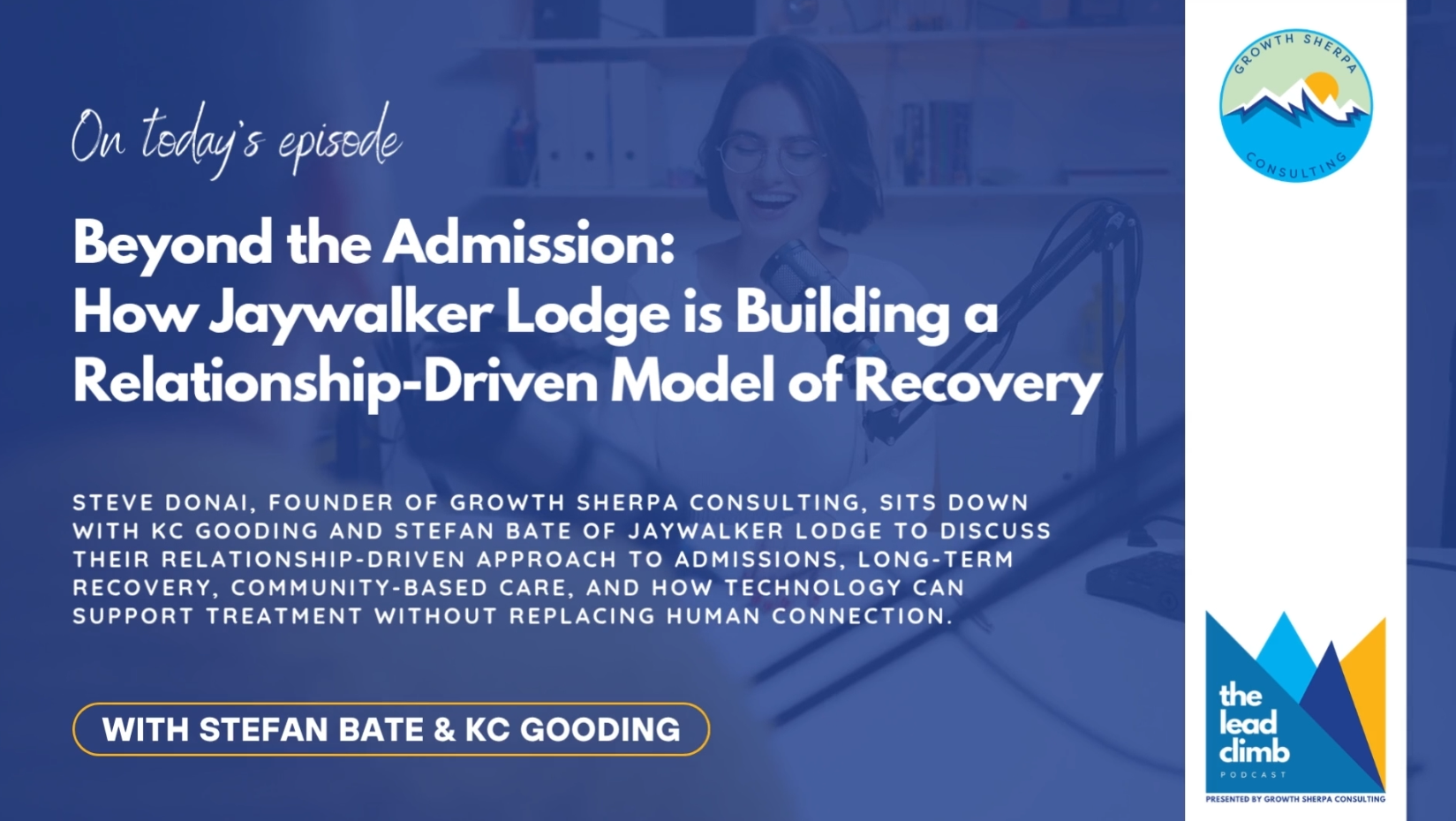
Behavioral health organizations spend a great deal of time focused on generating leads, answering calls, improving conversion rates, and increasing admissions. Those metrics matter, but they can also create an unintended problem when the admissions process becomes too transactional. In a recent episode of The Lead Climb, Growth Sherpa Consulting founder Steve Donai sat down with KC Gooding and Stefan Bate of Jaywalker Lodge to discuss a different approach, one built around relationships, trust, family engagement, and long-term recovery rather than simply moving someone through the admissions process as quickly as possible.
At Jaywalker Lodge, admissions begins with listening. Many of the men they serve have already experienced multiple treatment episodes, and their families have often spent years navigating relapse, crisis, financial stress, and repeated attempts at care. Rather than immediately focusing on insurance, deductibles, and arrival dates, the admissions team works to understand what the individual and family have experienced and whether Jaywalker is truly the right fit. Sometimes that means admitting the client, and sometimes it means helping the family find another program better suited to their needs.
That approach is strengthened by close alignment between marketing, admissions, and clinical leadership. Instead of operating as separate departments, the teams share information early so they can better understand the prospective client, the family system, previous treatment history, and whether the person is likely to benefit from the program’s model. That changes the central admissions question from “Can we admit this person?” to “Is this person likely to benefit from what we do?” Better front-end alignment can improve client fit, strengthen the treatment environment, and create a more consistent experience from first contact through clinical care.
The conversation also explored the growing role of artificial intelligence in behavioral healthcare. AI can help organizations improve efficiency, answer calls, automate repetitive tasks, and support admissions teams, but the challenge is using that technology without removing the human connection that builds trust. For someone reaching out during one of the most difficult moments of their life, the first interaction matters. Technology should make people more effective and responsive, but it should support the relationship rather than become the relationship.
Ultimately, the Jaywalker model centers on the difference between completing treatment and experiencing recovery. Through its open community model of care, the organization focuses on helping clients build relationships, recovery capital, purpose, and real-world experience rather than simply succeeding within a contained treatment environment. The broader lesson for behavioral health organizations is that marketing, admissions, clinical care, operations, and technology should all be designed around the same outcome: long-term recovery. The admission is important, but it is only the beginning.